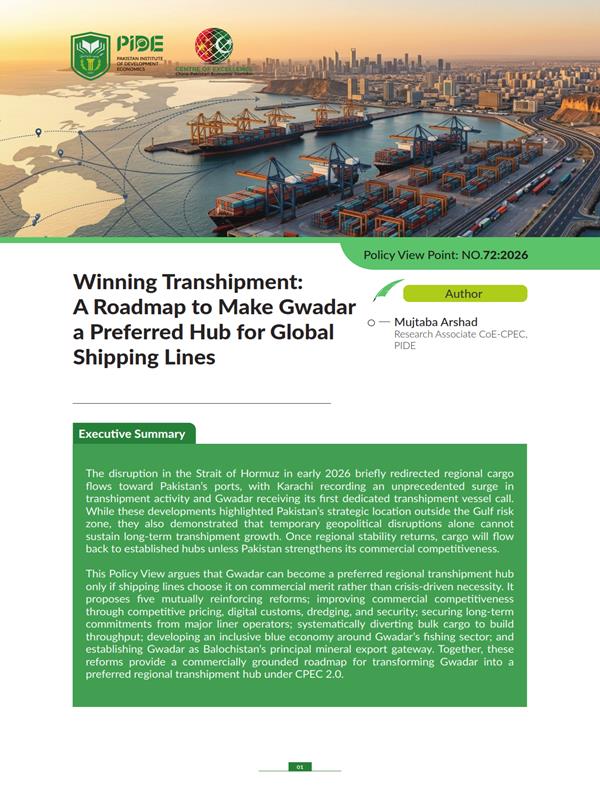
The disruption in the Strait of Hormuz in early 2026 briefly redirected regional cargo flows toward Pakistan’s ports, with Karachi recording an unprecedented surge in transhipment activity and Gwadar receiving its first dedicated transhipment vessel call. While these developments highlighted Pakistan’s strategic location outside the Gulf risk zone, they also demonstrated that temporary geopolitical disruptions alone cannot sustain long-term transhipment growth. Once regional stability returns, cargo will flow back to established hubs unless Pakistan strengthens its commercial competitiveness.
This Policy View argues that Gwadar can become a preferred regional transhipment hub only if shipping lines choose it on commercial merit rather than crisis-driven necessity. It proposes five mutually reinforcing reforms; improving commercial competitiveness through competitive pricing, digital customs, dredging, and security; securing long-term commitments from major liner operators; systematically diverting bulk cargo to build throughput; developing an inclusive blue economy around Gwadar’s fishing sector; and establishing Gwadar as Balochistan’s principal mineral export gateway. Together, these reforms provide a commercially grounded roadmap for transforming Gwadar into a preferred regional transhipment hub under CPEC 2.0.